


Click on an image to go to the relevant section:
 |
 |
 |
 |
 |
 |
 |
 |
 |
Download the campaign files here!
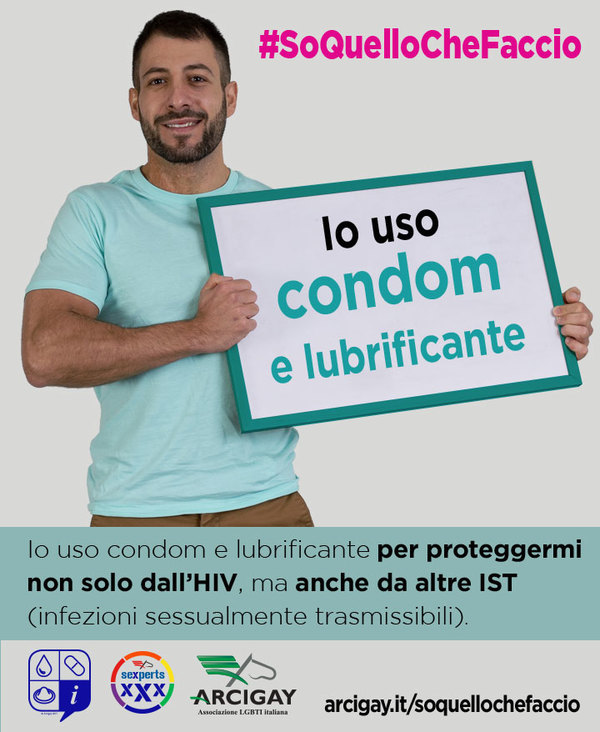
I USE CONDOM AND LUB
The condom it is the most “versatile” means of prevention”: in penetrative intercourse it is highly effective in blocking the transmission of many infections: HIV, hepatitis (B and C), syphilis, gonorrhea and even HPV (condylomas) if the infectious site is covered by the condom. The use of lubricant in anal intercourse is equally important To prevent the condom from breaking, but also for easier penetration. But remember: It is important to ALWAYS use it at least in occasional anal and vaginal intercourse, or you lose the advantage given by its high protection. If you can't use it all the time, consider other alternative or complementary options. like PrEP, or TasP if you have a partner with HIV, and increase the frequency of checks you have. If your condom breaks In case of high-risk anal intercourse, ask for PEP. Also, a condom. for oral sex is also the only defense we have when we want to protect ourselves from infections which can actually be transmitted through oral sex, such as syphilis and gonorrhea.
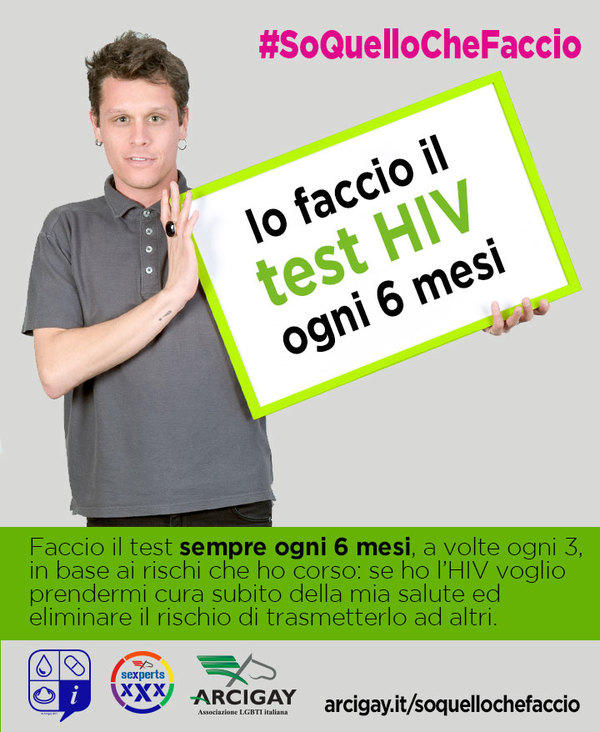
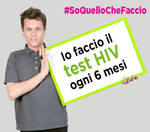
I DO THE TEST EVERY 6 MONTHS
Take the test at least every 6 months or even more often (depending on your sex life), it's always the right choice. Today we know what to do. The test makes life easier in any case, whatever the outcome. If it's negative, you can breathe a sigh of relief. and continue to protect yourself by choosing the most suitable means, If the result is confirmed positive, therapy can be started immediately, which has several advantages: it blocks and suppresses the replication of the virus, immediately limiting the damage it can cause in the long term, maintaining or restoring your immune system to an excellent state, and within a few months you become effectively non-infectious when the virus is undetectable in your blood. So why be afraid? It's understandable to always have some, but that shouldn't stop us from doing it! There are various types of tests currently in circulation, always ask “what generation am I from”: The fourth-generation tests allow you to detect any infections as early as 1 month after risky intercourse, while with the second- and third-generation tests you have to wait 3 months.
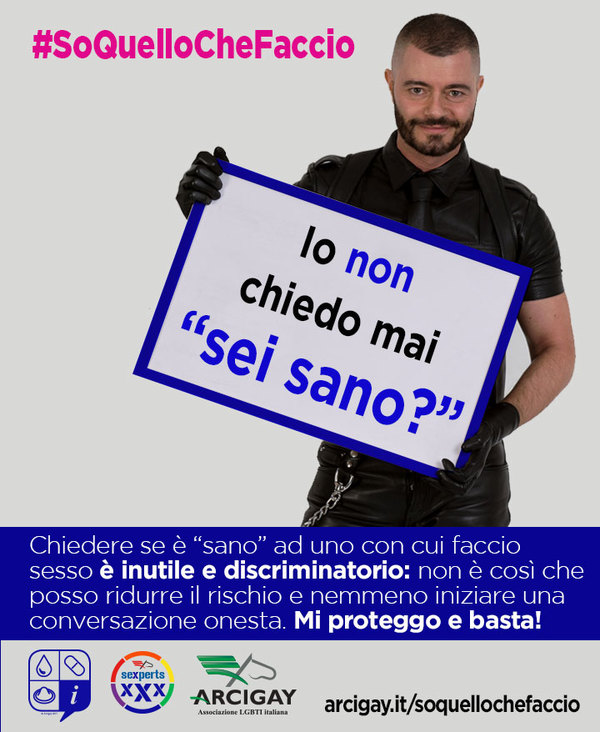
I NOT I ASK NEVER “ARE YOU HEALTHY?”
Sometimes, before or after intercourse, he asks himself “are you healthy?”. But there is no less useful and appropriate question. In casual encounters, especially if you don't have HIV or assume you don't, asking someone about their health status (whether they have HIV or other STIs) and based on that answer deciding how much and how to protect yourself doesn't make much sense. On the one hand, because many people with HIV, or other STIs, don't know they have them., and therefore they will answer you convinced of a situation that is not real. On the other hand, because you can't reasonably expect people who know they have HIV to tell you, given the high level of fear and stigma, often completely irrational, that surrounds them. There's not even a legal obligation to "tell" them. The real risk with HIV is with those who don't know they have it., because he will have a lot of virus in his blood since he is not undergoing therapy: the peak of infectivity is absolutely highest in the first two months after infection, when it is also likely that he has not yet been tested. On the contrary, a person with HIV who is regularly treated and has an undetectable viral load for at least six months, not only is he probably doing very well, but it doesn't even transmit the virus: so what should it tell you? In short: just protect yourself!
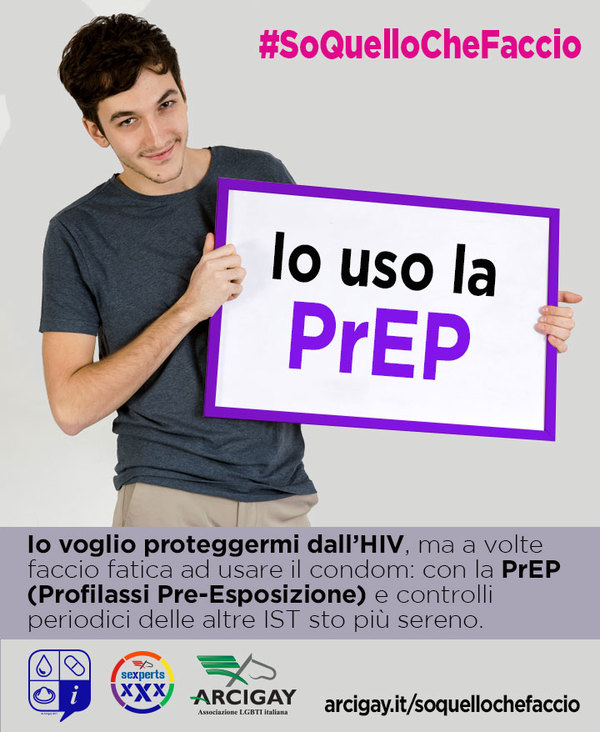 I USE THE PrEP
If you have difficulty, for a thousand reasons, in consistently using a condom in anal intercourse, you could start to find out about the possibility of taking PrEP (Pre-Exposure Prophylaxis) as a complementary or alternative strategy HIV prevention. PrEP it's a drug (original trade name “Truvada”, components “tenofovir DF” and “emtricitabine”) which prevents the replication of the HIV virus when you come into contact with it and can have a very high efficacy around 99% if used perfectly as prescribed. To be effective it must be taken consistently every day, or with a dosage of 4 pills "as needed"“ (2 pills in the 24 hours before risky intercourse and another 2 approximately 24 and 48 hours after the first dose): the principle is that there must be enough drug in the blood for it to be effective. But you need to know a few things. First of all, PrEP does not protect against other STIs, but only from HIV, and then consider also getting regular checks for other STIs if you use it because you don't use condoms. Also, before using it You should do some tests, and definitely the HIV test., because if you start PrEP and you already have HIV, your virus would become resistant to that drug, and it is an important drug in the treatment of HIV (it is not the only one, but it is important). Finally PrEP requires a medical prescription from an infectious disease specialist. Until it is fully or partially refundable by the State, It can be purchased in a pharmacy upon presentation of a medical prescription Taken by an infectious disease specialist and paid for personally. The price of the original Truvada is over €700 per pack, but generic versions are now available for around €115 (30 pills): the one currently available is DOC (drug code: 044113013). For more information on PrEP, visit www.prepinfo.it.
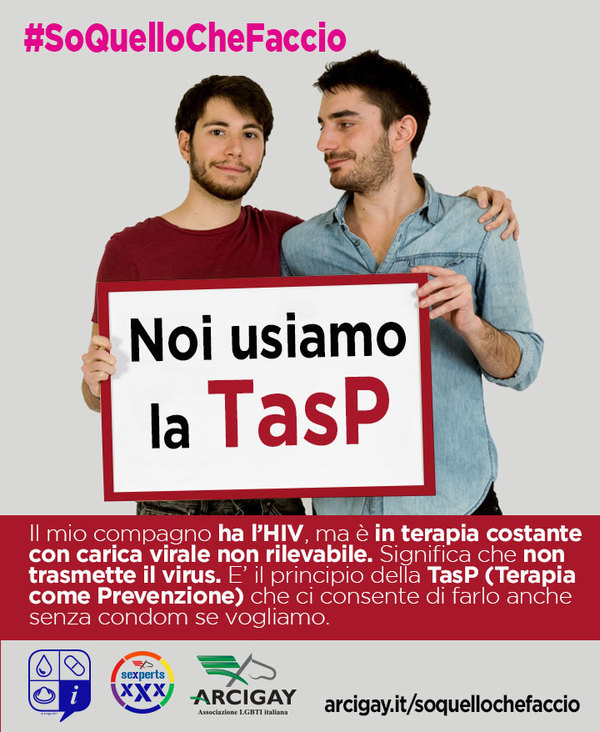 WE USE THE TasP
People with HIV who consistently follow an effective therapy and who have “undetectable viral load” (i.e. complete undetectable or less than 200 copies) they do not transmit the virus. It is the principle of TasP (in English ’Treatment as Prevention“, in Italian Therapy as Prevention). This has been said since 2008 and several studies have now been carried out to confirm this. The Atlanta CDC also recently came out with this position. Viral load (or “viremia”) is the amount of HIV virus that a person with HIV has in their blood.. Every 4 or 6 months, a person with HIV typically undergoes checks not only to ensure that their immune system is improving or stable, but also to “count” this amount of virus, which is measured in “copies.”. “Undetectable” (in English “undetectable“) It means that there is so little virus in the blood that the tools used to quantify it cannot even count the copies., but the strategy is effective even when they can be counted but are less than 200. Usually, those who take the therapy correctly are stably “undetectable” after a few months from the start of the therapy or may have slight fluctuations in detectability below 200 copies. Those who have a partner with HIV who is taking therapy correctly and is therefore "undetectable" can use TasP as a complementary or alternative strategy to the condom, knowing obviously that even in this case there is no protection compared to other STIs if you don't use a condom.
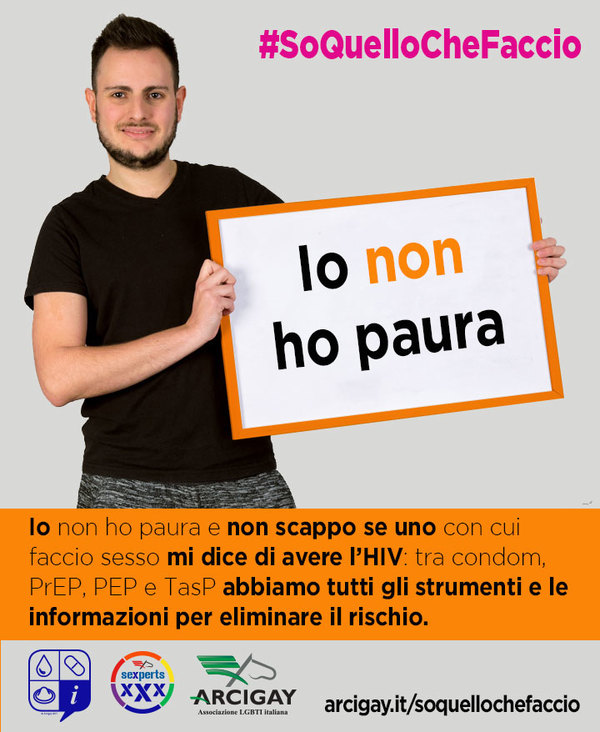 I NOT I AM AFRAID
Today there are many tools to manage risk and prevent HIV: condoms and lubricants, PrEP, TasP, PEP. Reacting with irrational fears, avoidance, and denial when meeting someone who tells us they have HIV, or who we know has HIV, it hurts The collective effort we all make towards prevention is detrimental to the person with HIV, and we may even have missed the opportunity to find the right person. For sex or for life. Furthermore, creates a climate where a person with HIV feels they have to hide their HIV status with the people they meet. If for any reason a person with HIV is not on treatment and therefore has a detectable viral load or higher than 200 copies/mL, you can use a condom and lubricant, and in the unfortunate event that it breaks during anal sex, you can ask for PEP for the person who does not have HIV. If, however, they are on treatment with an undetectable viral load, they are not transmitting the virus, and you can make your own decisions about how much and how to protect yourself with a condom, for HIV or other STIs. In any case, have a rational, open and informed attitude on the HIV topic It will also reassure the person with HIV who may not initially tell you, but then, faced with your attitude, may decide to tell you. The only thing none of us need is to live in fear!
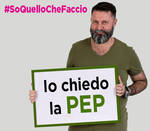
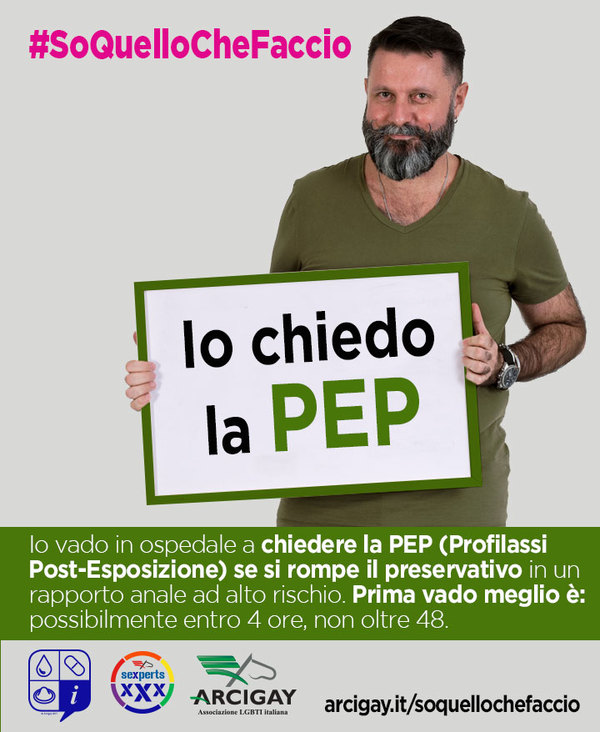 I ASK FOR THE PEP
PEP (Post-Exposure Prophylaxis) it's a therapy that a person who believes they have just run a high risk can ask the health facilities. It is based on the administration of the same drugs that are normally taken by people with HIV. Immediately after the risk, you must start taking PEP and continue for a month: Since the drug works to the extent that it interferes with the replication of the virus that has just entered the blood (if it has entered), it is important that you start right away, within 4 hours for maximum effectiveness, and in any case better if not beyond 48 hours. The sooner you go, the better. If your condom breaks during anal sex, for example, You can request PEP in services that normally treat people living with HIV (infectious disease departments, HIV screening services that also provide "care"), or in the emergency room. If the potentially infectious event occurs at night, the emergency room is likely the only option left. PEP is recommended for high risk in the following conditions: internal ejaculation (anal, oral – blowjob – or vaginal) by an HIV-positive partner not on therapy and with a detectable viral load or whose serological status is unknown, but with a history or pathology that suggests a recent risk; insertive anal or vaginal intercourse (to have put it) or receptive (to have taken it) unprotected (for example, because the condom broke), with an HIV-positive partner not on treatment. However, consider that it is a complete therapy in all respects with all its possible short-term side effects: it is not the morning-after pill.
Back to top
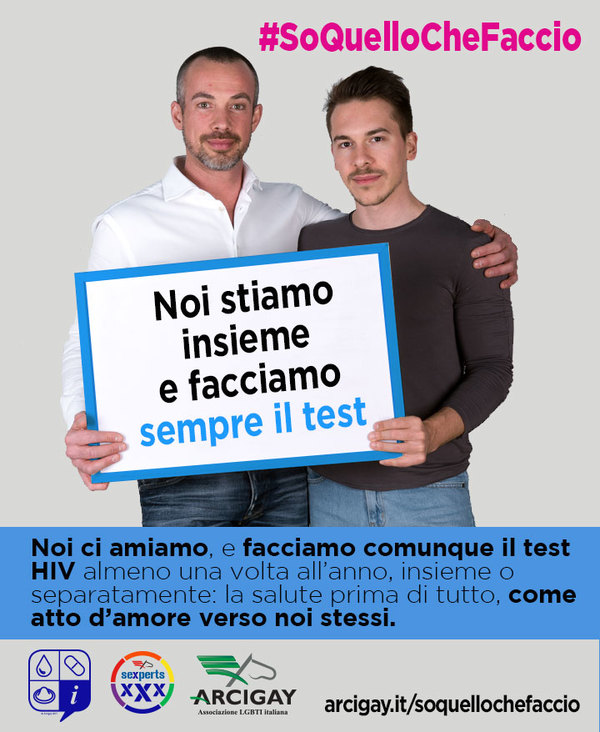 US WE ARE TOGETHER AND WE DO IT ALWAYS THE TEST
Do the HIV test regularly It's a habit that should always be maintained even when you're in a couple, especially if you've decided to stop using condoms as a couple. If you're both HIV-free at the beginning and using prevention methods (condoms and lubricants or PrEP), you can get tested to decide whether and when to stop using them based on the agreements you deem best for your relationship model—closed or open, classic or polyamorous, etc. The rainbow of love in our community is very diverse, but whatever your couple model preference, Please continue to maintain the habit of getting tested for HIV at least once a year! Similarly, if you are a sero-discordant couple (one has HIV and the other does not) and you use TasP, testing the person without HIV is even more appropriate to monitor the situation and make sure everything is going well. In that case, obviously, testing the HIV-positive partner for viremia is the most important part, and you could also consider doing it more frequently to reassure both of you (for example, every 4 months instead of every 6 months, as is increasingly popular). In any case, whether both of you do not have HIV, or only one of you does, Regular annual testing done alone or together is a good habit to maintain. as an act of love towards yourselves, as individuals and as a couple!
Back to top
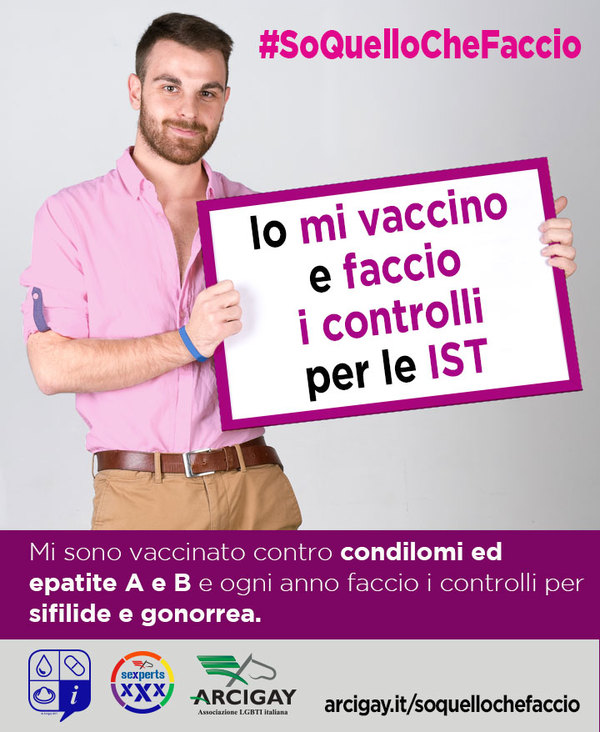 I ME VACCINE AND I DO THE CONTROLS FOR THE IST
For STIs (Sexually Transmitted Infections) other than HIV, there are other things you can do besides using condoms. For example, you can get vaccinated against some of them. You can get vaccinated for free (if you say you are gay or have sex with men) for hepatitis A (HAV) and B (HBV). Depending on the regions, You can get vaccinated against HPV at varying prices., that is, the papillomavirus Responsible for warts and/or cancer: There are many types of HPV, and there is a nine-valent vaccine (effective against nine types) that protects against most of the types responsible for warts or cancer. Keep in mind that HPV circulates very easily, so the vaccine, for greater effectiveness, is recommended especially for younger people who are more likely not to have contracted it yet. However, you might still consider getting it even if you've already contracted HPV over the years: perhaps you've contracted some types, but haven't contracted others from which the vaccine would protect you. And then there are the periodic checks you can get for other STIs. For Hepatitis C (HCV) you can get tested especially if you have anal sex without a condom. or do a little more hardcore practices (fisting for example). Today there is a definitive cure that eradicates the virus, although it is very expensive for the state and therefore access is not immediate. Even for the syphilis you can take the test and it is advisable because it can also be transmitted through unprotected oral sex (both when you give a "blowjob" and when you receive one). The same goes for gonorrhea and chlamydia, the controls for which vary depending on the possible location of the bacteria: A urine test is done if the bacteria are in the urinary tract, or a swab is done if they are in the throat or anus.
There combined prevention and the program Sexperts by Arcigay
There combined prevention it is an approach that brings together various prevention tools. Talk about it and get informed first. But then also condoms or pharmacological prevention strategies (PrEP, TasP, PEP). And above all: HIV testing!

Sexperts It is an Arcigay program for training and construction in the area of groups of peer educators specialized in HIV prevention and control.
Thanks to:
- the volunteers and activists of Arcigay Roma and Arcigay Vicenza for their availability;
- Martina Pullin for the professional photo shoot.