
[:it]Varese, January 21, 2020
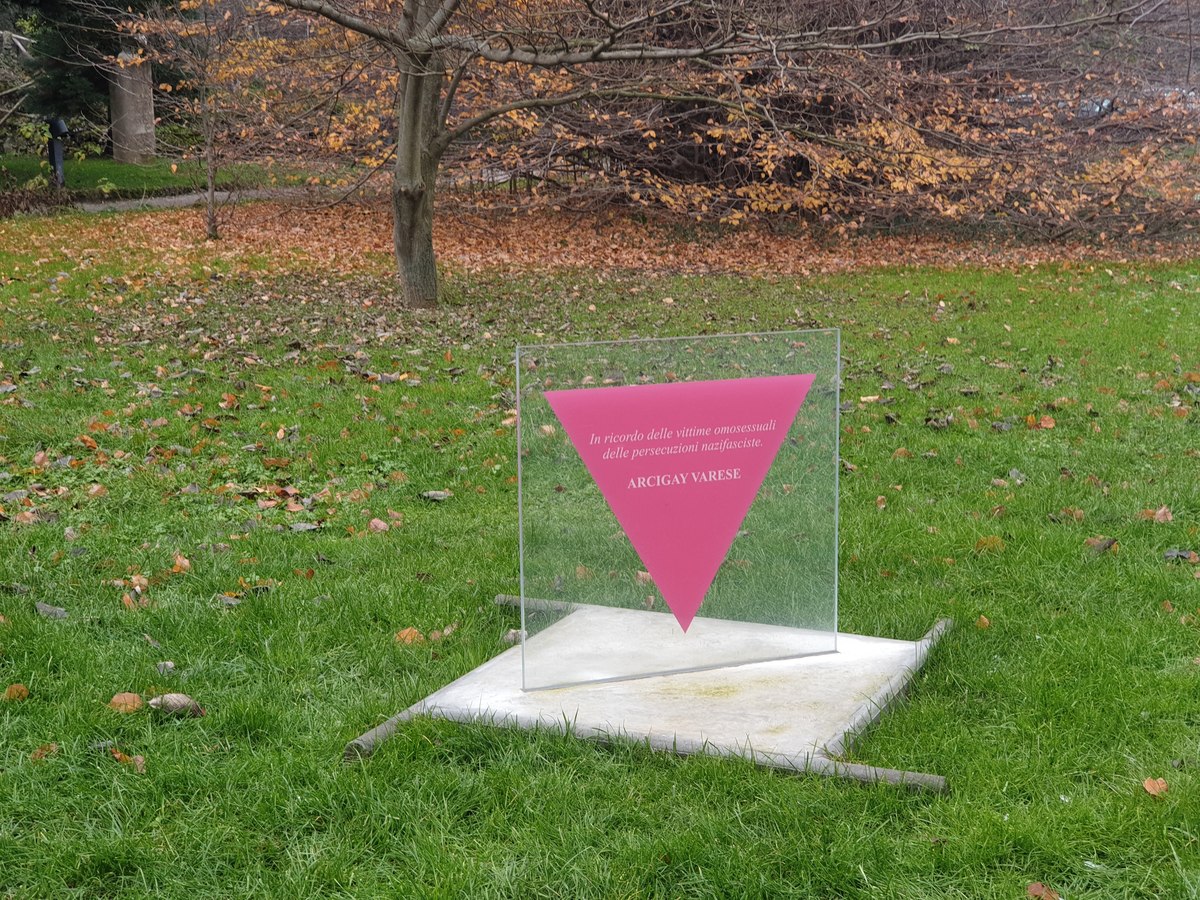
Saturday, January 25th at 11:00 a.m. A commemoration of homosexual victims of the Holocaust will take place at the glass plaque commemorating the pink triangles in the Estensi Gardens, near the library entrance in Varese.
The president of Arcigay Varese will speak John Boschini, the president of the Provincial ANPI Ester De Tomasi, the general secretary of the CGIL Varese Umberto Colombo, Dolores De Marco of AGEDO Como-Lecco (Association of Parents of Homosexuals) and representatives of various Varese communities, including Arci Varese, Amnesty Varese, CuorInversi.
The deportation of homosexual people during Nazism
In 1928, the Nazi Party officially declared homosexuals its enemies: they, it was claimed, spread evil in German society, undermining "healthy masculinity" and reproductive capacity. Hitler's rise to power in January 1933 marked the beginning of the total destruction of the German homosexual movement and the beginning of a ruthless persecution. In 1934, the Reichzentrale zur Bekämpfung der Homosexualität (Imperial Center for Combating Homosexuality) was established, a special department of the Gestapo dedicated to homosexuality. The so-called "pink lists" began to be drawn up, which collected data on homosexuals. From 1936, they were indicated with a pink triangle. Pink, like the color of young girls, was used to ridicule masculinity.
In Italy, however, there were three main instruments of repression: a warning (a sort of public warning to abandon "criminal" behavior, under penalty of more severe measures), a reprimand (a sort of two-year house arrest), and, above all, confinement, that is, forced residence in a place far from where the person lived, with restrictions on personal freedom. A rumor could be enough to trigger a complaint to the Police Commissioner. Without the suspect's knowledge, an investigation would begin, almost always resulting in indictment before the Provincial Commission.