
[:it]
On the occasion of the International Day Against Lesbophobia, Homophobia, Biphobia and Transphobia, “Medus3. Observations on Lesbophobia” presents the data that emerged from the observatory on violence against lesbians.
There have been 100 cases of lesbophobic violence in Italy over the last ten years (2011-2021). An average of 10 cases per year, one episode of lesbophobia per month. This significant figure refers only to media reports. In reality, there is a hidden dimension that reveals a much broader phenomenon, which emerges from the analysis of the results of the anonymous questionnaire with which the Observatory of the project "Medus3. Observations on Lesbophobia" recorded incidents of lesbophobic violence suffered by cis and trans women and non-binary people who identify as lesbian, bisexual, or queer. 156 people responded to the questionnaire. Three out of four people—77% of those who responded—said they had personally experienced episodes of lesbophobia. However, a full 85% of respondents knew at least one other person who had been a victim of lesbophobia; Finally, 1 in 4 people report having experienced more than ten episodes of violence. Lesbian-phobic violence is a daily occurrence that has not diminished in recent years.
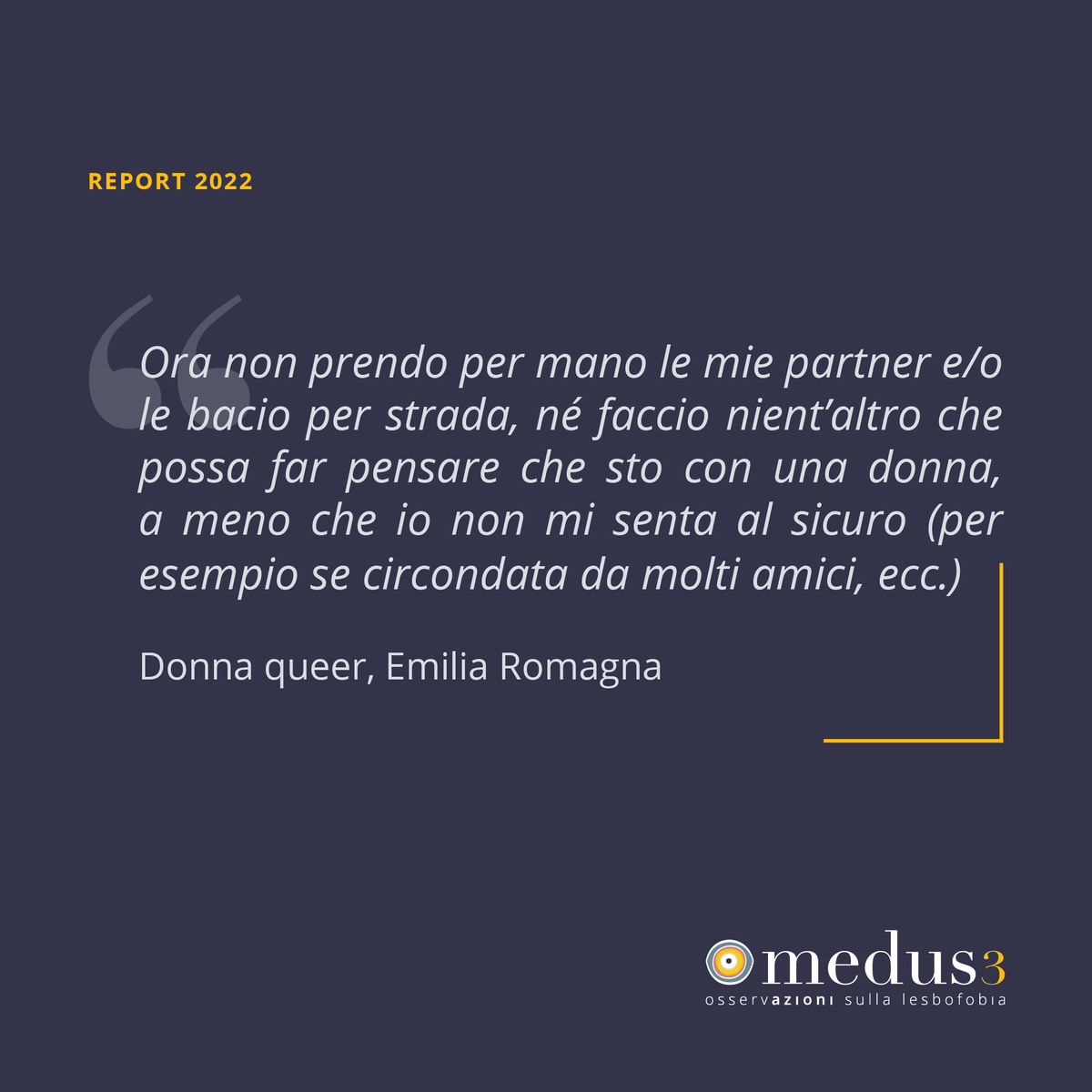
The data collected in this first report, in fact, demonstrates once again how lesbophobia is a phenomenon rooted in our society yet underestimated and silenced by institutions and the media, which fail to offer narratives capable of revealing the true origins of lesbophobic violence. Lesbophobia, like femicide, is not a random phenomenon, representative of a patriarchal, misogynistic, sexist, and homo-lesbo-transaphobic culture. Furthermore, the numerical difference between cases published by the media and those collected through the anonymous questionnaire indicates the persistent reluctance of victims to report cases of lesbophobic aggression they have experienced or witnessed. This reluctance is driven by a lack of trust in the Italian legal system or by fear of the consequences that reporting would entail at a personal, social, or work-related level. Central to this mechanism that "forces" lesbians to choose silence is the risk of victim blaming (secondary violence). Finally, the Observatory, which recorded cases of lesbophobia that occurred up to December 2021, also noted the occurrence of other lesbophobic episodes in 2022, 9 in the first few months of the year alone.
The collection and analysis of cases of lesbophobia has clearly revealed not only the roots of a discriminatory phenomenon, closely linked to gender-based violence, but also its manifestation in multiple forms that affect all spheres of life and society, with consequences and manifestations that are not always visible, but no less serious. No space is immune to lesbophobia, which manifests itself primarily in the streets and within families, among groups of friends and acquaintances, but also in the workplace and schools. It is important to emphasize that these cases are just the tip of the iceberg: most lesbophobic violence goes unreported, unpublicized, and unpublished.
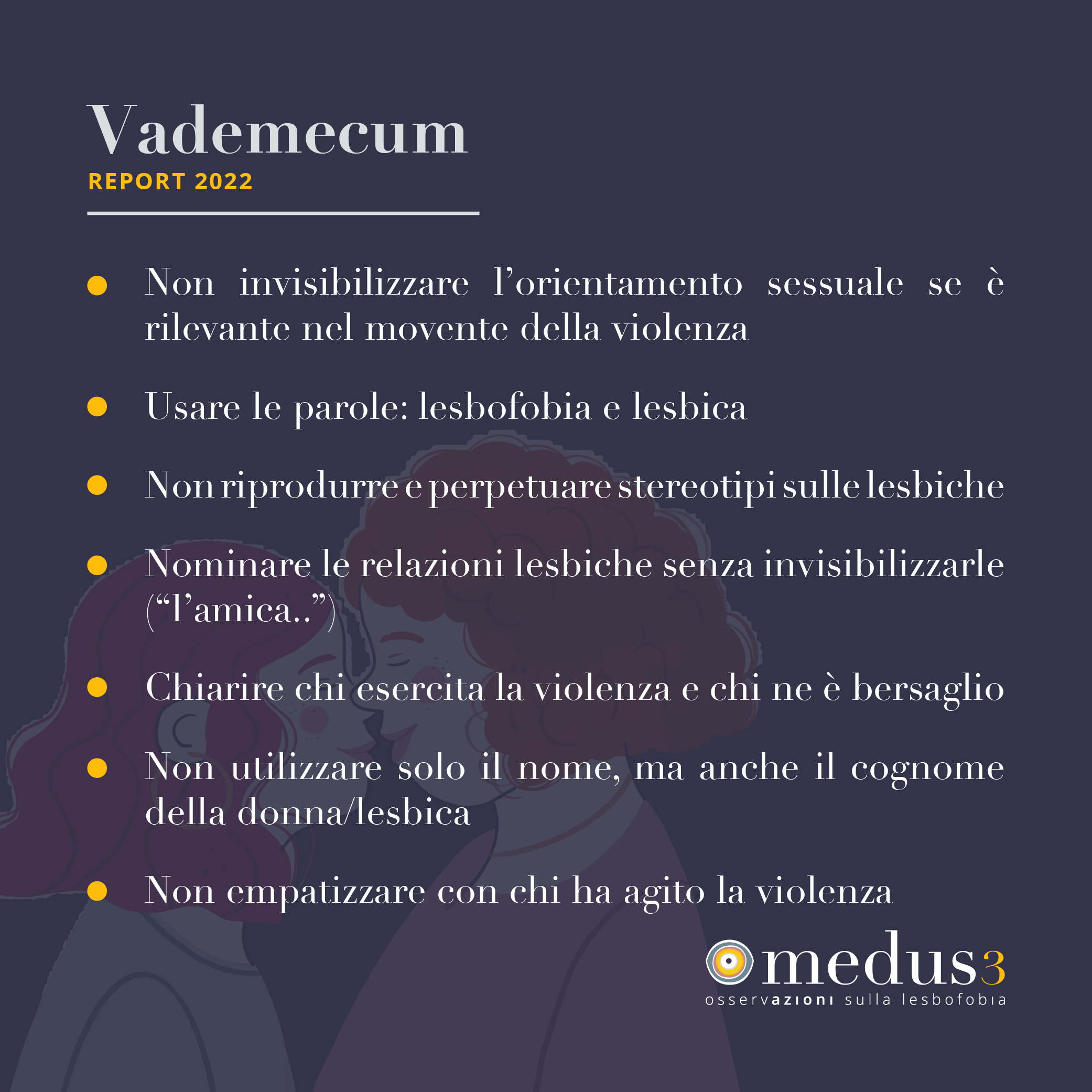
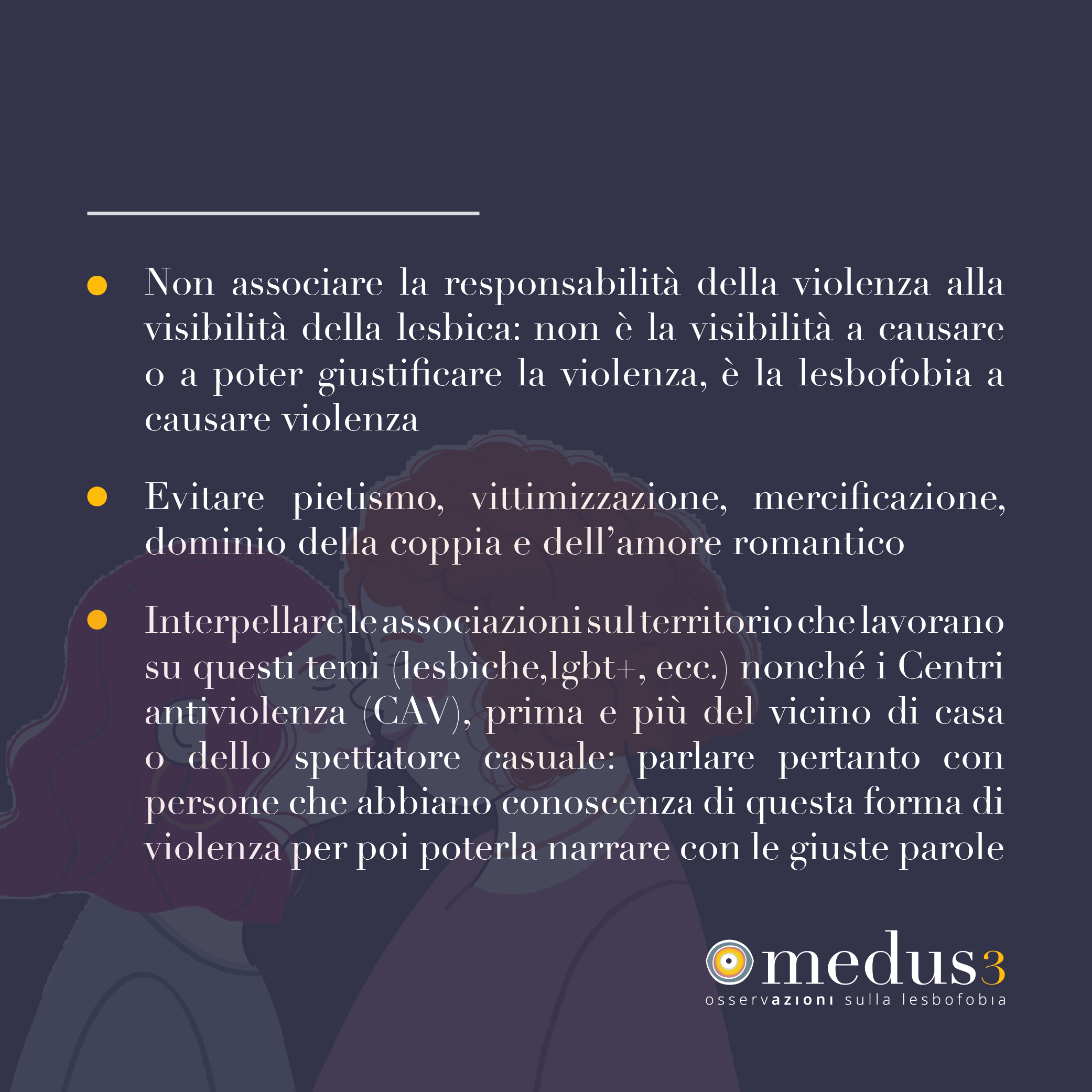
The report, the result of two years of collaborative work, analyzes data collected through the questionnaire (chapter I) and the observatory (chapter II), reflects on the impact of lesbophobia (chapter III), and proposes concrete actions to combat it (chapter IV). It also contains a brief legal analysis of the situation in Italy, the only founding member state of the European Union to have not yet adopted specific legislation to combat and penalize homo-lesbian-transphobic hatred, in derogation of the 2012 EU Directive, implemented by Italy in 2015.
Download the report here
Medusɜ is a project born in 2020 that involves many Italian lesbian activist groups, including associations and individuals. The project focuses on lesbophobia, a phenomenon that affects the majority of lesbians, bisexual women, and non-binary people socialized and perceived as women, yet is perceived as a minority phenomenon by society, the media, and even the LGBTQIA+ movement itself. The lesbicide of Elisa Pomarelli in 2019, the refusal to acknowledge her lesbophobic origins, the granting of a fast-track trial, and the resulting reduction in the lesbicide's sentence, have acted as a powerful driver of anger and action for the intersectional and inclusive lesbian movement. The Medusɜ network aims to record, through constant monitoring and cataloging, all cases of lesbophobic violence reported in newspapers and social media; During 2021, Medusɜ also published an anonymous questionnaire regarding experiences of lesbophobia, always available on the website www.retemeduse.it, which always remains active and available to anyone who wishes to report.
“We are Medusɜ: we choose the plural because we are a collective project, we choose the schwa to find our space in language. We use the power of our gaze to see and expose the micro and macro violence we are targeted by and to dismantle the patriarchy that oppresses us.”
DOWNLOAD HERE THE REPORT
[:]