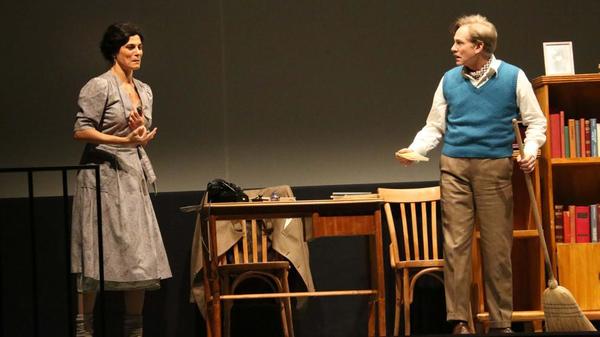

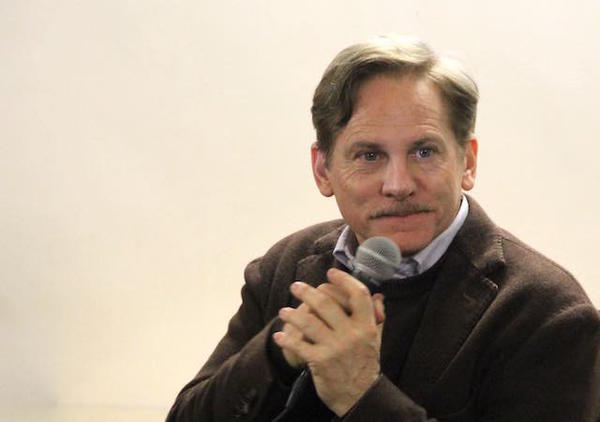
Giulio Scarpati, a cinema and theatre actor, known to the general public for some very successful television series, is touring Italy, together with Valeria Solarino, with the theatrical staging of A Special Day, based on the 1977 cult film of the same name by Ettore Scola.
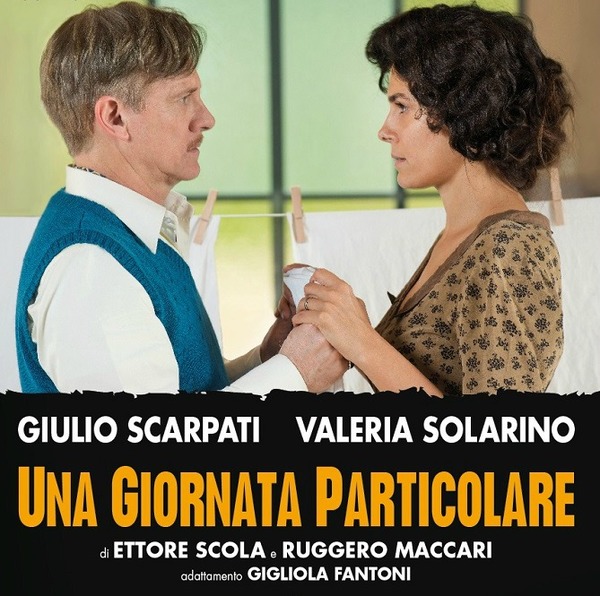
The “special day” Scola's film talks about is the one in which Benito Mussolini and Adolf Hitler met in May 1938. Against the backdrop of this day, which was a day of great celebration for young Italian fascists, Gabriele's intimate drama unfolds, played by Marcello Mastroianni in the film and by Giulio Scarpati in the current theatrical version. Gabriele is a homosexual radio commentator Fired by the EIAR and awaiting confinement for his sexual orientation. While the city is gripped by the frenzy of the fascist parade, Gabriele meets his neighbor, Antonietta, and the two, clear prototypes of social exclusion, form a bond as profound as it inevitably fades.
Giulio Scarpati spoke during the radio broadcast The Other Frequency – LGBT on Air (Radio Amore Napoli), during the episode on Monday, January 16th. Below is the interview.
Giulio, why did you choose to stage Scola's famous film?
It was a film I adored, and I'd already been thinking about a theatrical production some time ago. So I spoke with Ettore Scola and Nora Venturini, the director, and we realized we could do it. It's a film I loved very much, with an extraordinary Mastroianni. It's also a film with very theatrical qualities. After all, we made a very faithful adaptation of the film. Maccari and Scola's words are all there.
Gabriele is one of the first gay protagonists in Italian cinema. How did you approach this character?
Already in Mastroianni's interpretation, Gabriele's homosexuality was addressed with great sensitivity. I tried to understand what it meant to be homosexual during fascism. What it felt like to live with the certainty that your way of being could get you fired and condemn you to exile. How necessary it was to pretend and hide. That's why I grew a mustache for the show, because I imagined Gabriele being forced, against his will, to live undercover, fearful of never being able to be himself. The special day is the one when Gabriele is to be taken into exile, just as the historic meeting between Mussolini and Hitler takes place, and despite this, Gabriele finds the strength to confide in Antonietta, this woman, servant and slave to her husband, who represents another facet of loneliness. Gabriele and Antonietta are two people who can never say what they really think.. And yes, they are very different human profiles, but they are assimilated by the fact of experiencing two different forms of slavery. And yet, despite their differences, Gabriele and Antonietta open up to each other and even manage to experience a surge of love.
With Holocaust Remembrance Day just days away, which also commemorates the pink triangles persecuted by the Nazis and Fascists, do you think it's still necessary to remain vigilant in the fight against discrimination against LGBT people?
I think what we're experiencing today marks a significant step forward for homosexuals. Aside from civil unions, a new awareness is maturing in the country And ever more light is being shed on the atrocious discrimination of the past. I believe we can now look to the future with greater optimism. And we can make people understand even more clearly that human dignity is an absolute good and that marginalization is the worst thing, in whatever form it occurs. It's not just a matter of defending a sexual orientation, but of defending any kind of identity. Respect for human beings is the basis of everything and there is no acceptable political reason that can express the need to discriminate against a group of people. This text is so powerful precisely because it concerns marginalized individuals. Gabriele and Antonietta don't participate in the fascist parade because they are on the margins of a society that doesn't allow them.
A Special Day will be on stage at the Teatro Diana in Naples until January 22nd, then it will travel to Siena, Pisa, the Teatro Franco Parenti in Milan, the Teatro La Pergola in Florence, Puglia, and on tour throughout Italy.