

Christmas is approaching, and so is the season of gifts! That's why we took a stroll through the small and medium-sized publishing fair in Rome, Più Libri Più Liberi, and found some gift ideas for you—rainbow books, of course—to place under the trees of the people you love most. Or under your own tree, because treating yourself and treating yourself to a beautiful book for the holidays is always a winning rainbow idea that we recommend to everyone!
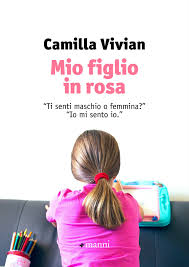
Let's start with a new feature presented by the publisher Manni: “My son in pink” Of Camilla Vivian. Here is the incipit of the book: My name is Camilla and my son dresses in pink.The story is that of a "normal" family, Camilla's family, whose second-born, Federico, a biological male, has expressed the desire to be (also) a girl since the age of a year and a half. And Camilla has decided not to stand in his way, to listen, because that way Federico is happier.
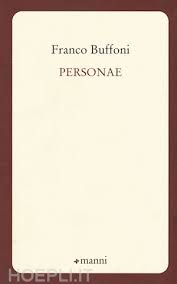
The publisher Manni also brought to the fair the beautiful book by Franco Buffoni, “Personae”, a decidedly successful experiment in narrative verse prepared for the stage, a drama in poetry whose characters, suspended in the lyrical and imaginary space of a tragically announced death, tell their stories and recount, from different perspectives, the eternal dialectic between conservative tensions and evolutionary drives, reactionary resistance and secular and progressive reflections.
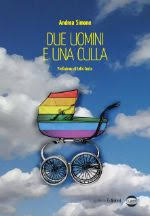
The publisher Golem, then, presented two new rainbow products at the Fair. The first is “Two Men and a Cradle” di Andrea Simone which tells a true story of homoparenting: the story of Anna, a little girl with two fathers, Andrea and Gianni. Anna was chosen, decided upon, desired, and conceived by two men. It all began in November 2012, when Andrea and Gianni felt the desire to have a child and joined the Rainbow Families. In just a few months, Andrea and Gianni began an incredible journey: from Milan to Los Angeles to San Francisco, where they met a donor who donated their egg and a surrogate who carried Anna inside her for nine months. When Anna came into the world, Andrea and Gianni felt like the happiest people on earth. The book's preface is written by Lella Costa.
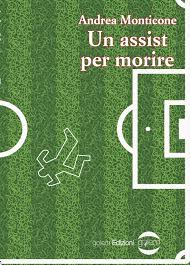
Always for the publisher Golem, it is necessary to point out “An assist to die” Of Andrea Monticone. A thriller set in the world of football starring Max Brandi, an unusual and inconvenient commissioner: openly gay, perhaps corrupt, and with a bad heart due to a work-related accident. Massimo Brandi has reached the corridor of the Flying Squad and, as usual, keeps his gaze down, so as not to meet those of some colleagues who have never shown much enthusiasm at the idea of his return to the Police Headquarters: Thus begins Chapter Four of the book, which also marks the beginning of the investigation into the death of a young champion, Mark Andreani, who fell from his balcony. Accident, crime, suicide? Max Brandi delves into a world inhabited by characters, dramatic or farcical, shady or naive: the characters of the world of football, as you've never seen them before.
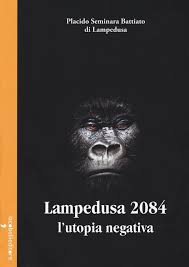
The publishing house Iacobelli, historically very attentive to gender issues, presents, as its latest LGBT releases, two books from the “gay culture” series written by Placido Seminara Battiato of Lampedusa: “The Origins of Homophobia and Conviction in Zimbabwe”, an essay that addresses the dramatic persecution of lesbians and gays in Africa with particular attention to the case of Zimbabwe and the incredible Banana – Dube trial and “Lampedusa 2084”, a theatrical text featuring a man and a monkey and which explores themes close to philosophical speculation. The back cover reads: “In stark contrast to biblical atrocities and the most lawless Catholicism, the author argues that homosexuals are very fertile, too fertile, damnably productive (see Ancient India with all the temples of Khajuraho, Ancient China, Ancient Japan).”
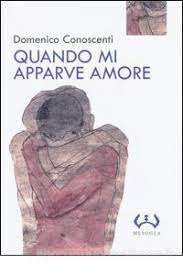
Mesogea editions then proposes, “When love appeared to me”, collection of short stories by Domenico Conoscenti, A Palermo-born author and scholar who has studied, among other things, a cult book of ante-litteram gay culture: "The Neoplatonists" by Risorgimento hero Luigi Settembrini. Conoscenti's stories navigate the adventurous terrain of the feelings and turmoil of people who sometimes advance, sometimes sink, in the search for and loss of identity. Stories that open and close like wounds of the soul, tracing the topography of a shadowy Palermo, the scene of painful relationships and difficult loves, where homosexuality bursts forth with the force of language and takes shape and voice—a voice often sorrowful or absorbed, but also lighthearted and amused.
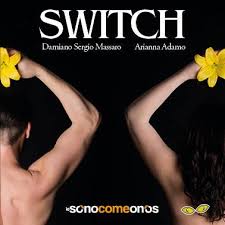
At the stand of Rhapsody editions, to welcome us is, instead, a young and eclectic author, Damiano Sergio Massaro, biotechnologist and PhD researcher in immunology and applied biotechnology, who presents us the novel written in collaboration with Arianna Adamo, journalist specializing in literature and ancient music. The novel in question is “Switch”, It tells the story of Riccardo and Benedetta, two young Romans caught between dreams and identity crises. Riccardo, a music enthusiast and immunology researcher, dreams of becoming a singer. Benedetta, an art enthusiast, dreams of painting. The thoughts, gestures, desires, and impulses of Riccardo and Benedetta begin to resemble and overlap more and more as the story unfolds, transforming "Switch" into an emotional and compelling existential journey that seeks freedom from any role and any archetype. Freedom not only for Riccardo and Benedetta, but for all of us.
The publishing house AlterEgo, which last year had already entertained us with “PopToys” Of John Lucchese and which, by the same author, presents “This blood is not mine”, indicates us as a precious LGBT literary presence at the fair, “mickeymouse03” Of Andrea Mauri, a novel that tells the love story, born in a chat, between Michele and Francesco. The only problem: Francesco is a priest! A priest with a difficult and tormented life, aware that he is living a life destined for failure, filled with secrets and defeats. Michele also lives a difficult life, forced into hiding to avoid having to deal with a homophobic brother and a mother who has chosen not to truly know him. The volatile relationship between Michele and Francesco is soon upended by contingent circumstances, and events take a dramatic turn that will shape the fate of both.

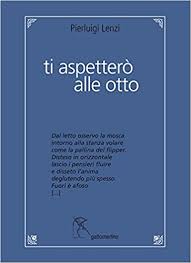
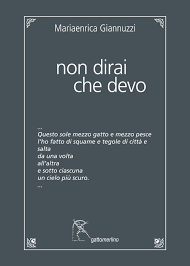
More Books, More Freedom there was also poetry and, in particular, we appreciated two anthologies presented by the very refined editions Gattomerlino. Let's talk about “I'll wait for you at eight.” Of Pierluigi Lenzi And “You won't say I have to” Of Mariaenrica Giannuzzi.
Pierluigi Lenzi, who is part of the “Gruppo 77” and has already published poetry collections, also boasting the prestigious attention of Rita Levi Montalcini and the appreciation of Maria Luisa Spaziani, arrives with “I'll wait for you at eight.” to his third work. In the preface, Dome Bulfaro writes: “"The emphasis is like a straw that speaks in the first person, so dryly and bluntly that it's cutting. It puts its tongue to it, a slimy trap, but above all it puts its face on it, using an expression dear to Umberto Fiori. It lays itself bare, unafraid to show us its shadows too.".
Mariaenrica Giannuzzi, an author whose research focuses on the political use of science, biopolitics and feminist thought, presents the collection for the publishing house Gattomerlino “You won't say I have to“, whose compositions, as Giannuzzi herself declares in the afterword, come from the search for an art of desire.
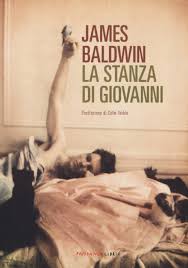
The offer is also rich Fandango among whose titles at the Fair, we choose “The Italy that wasn't there” Of Monica Cirinnà And “John's Room” Of James Baldwin.
Senator Cirinnà's book, whose name will forever be linked to a civilized law that, in Italy, after a long wait, brought dignity to the emotional relationships of homosexuals, retraces with the reader the stages of the law's implementation and discussion, engaging with the memory of many bitter moments and disappointments, but also with the hundreds of messages that Italians, during and after the debate on the Civil Unions law, sent to the senator to thank her for offering those who love one another of the same sexes new and fundamental guarantees to seal their emotional relationships.
“John's Room” by James Baldwin, on the other hand, is the new reprint of a “scandalous” book by a great 20th century American narrator who has too often been dramatically hidden by the respectability of the years in which he lived because the prevailing themes of his works are linked to racism and homosexuality (he, born and raised in Harlem, was a black man and was gay).‘Giovanni's Room” It recounts the Parisian encounter between David, a young New Yorker, and Giovanni. David is completely captivated by Giovanni's impetuosity and "luminosity," and he becomes conflicted between his "normal" life with his girlfriend Hella and his genuine, overwhelming passion with Giovanni. In a 1984 interview, Baldwin himself stated: “Giovanni’s Room” is about what happens when you’re afraid to love.
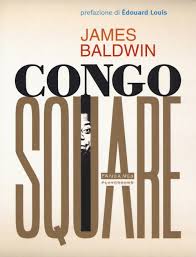
And speaking of James Baldwin, in the stand of the Fandango Playground, we found “Congo Square”, A fascinating autobiographical essay by James Baldwin, translated and published for the first time in Italy with a significant preface by Édouard Louis. In this essay, James Baldwin addresses and connects the themes that run through his work, especially the importance of diversity and its eternal conflict with the norm, as well as the meaning of being black in the history of the United States.
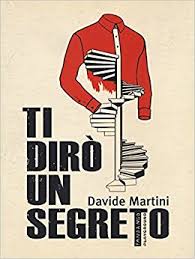
Finally, always for the Fandango Playground characters, at the fair we found a novel that, published a few months ago, has already had its verifiable appreciation from critics, we are talking about “I'll tell you a secret” Of David Martini, which tells the story of Lorenzo and Riccardo, already protagonists of "49 spectacular goals", who ten years later find themselves dealing with their insecurities, their desire for experience and their need to reconsider their love relationship and the ways in which they experience desire.
[:]